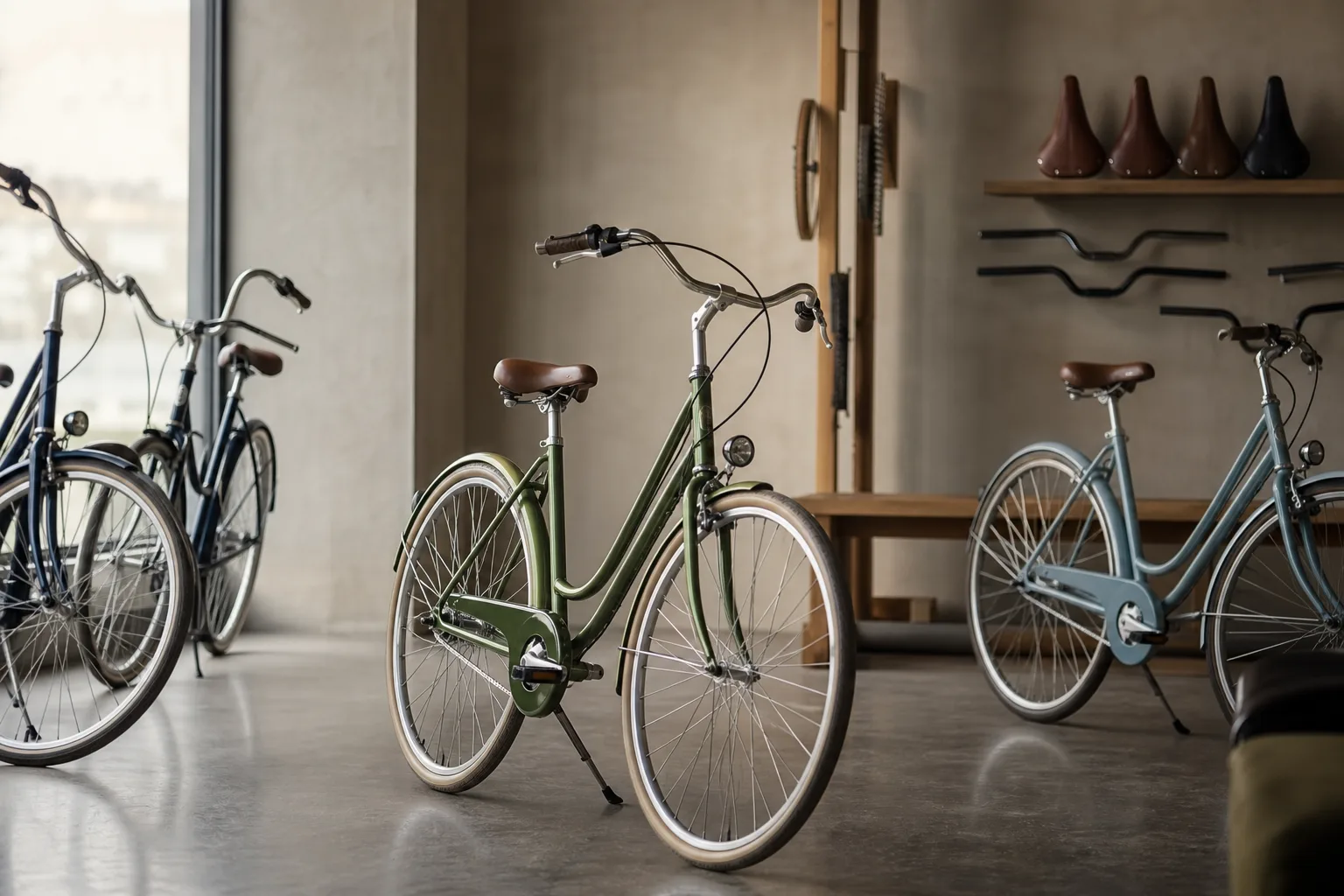
Comfortable in the first hundred yards, heavy by the second mile. What a cruiser trades
The upright bars, wide saddle and balloon tires that make a cruiser pleasant on flat ground are the same parts that cost you on a climb. Here is what that trade is worth.
Common questions
The eight-second showroom verdict
A cruiser feels good the instant you sit on it, which is exactly why the showroom test tells you almost nothing. Comfort at a standstill and comfort at mile three are different measurements.
Your torso as a wind brake
Riding fully upright puts your chest across the airflow instead of slicing through it. Below about ten miles an hour the penalty is trivial; into a headwind it is the main thing slowing you down.
No handlebar leverage on climbs
Riders in a forward position pull against the bars to add force to each pedal stroke. Sitting bolt upright removes that option, so a hill is fought with legs alone.
Sit on a cruiser in a shop and the verdict arrives before you have pedaled a stroke. Your hands land near your hips, your back is close to vertical, your weight settles into a saddle wide enough to spread it across both sit bones, and nothing hurts. That impression is real, and it is also the entire sales pitch, delivered in about eight seconds. What the eight seconds cannot tell you is what happens at minute twelve, on a grade, with a headwind, carrying a bag of groceries on the rear rack. Every part responsible for that first pleasant impression is also charging you rent.
The upright position buys comfort with your own body as a sail
Sitting upright puts your torso across the wind instead of through it, and above roughly ten miles an hour, air resistance becomes the largest thing you are working against. On a flat mile at a genuinely unhurried pace, that hardly registers, because you are not going fast enough for the penalty to bite. It starts to matter when you meet a steady headwind, when a flat road turns into a long shallow rise, or when you want to hold a pace rather than drift. The upright rider also cannot pull against the handlebars, so on a climb there is no leverage to add to what the legs are doing. That is the whole trade, stated plainly.
The saddle and tires are doing suspension work, and suspension costs energy
A wide sprung saddle and a two-inch balloon tire are both, functionally, suspension. They absorb the road so your spine does not have to, and they do it by deforming, which means turning your pedaling into heat rather than forward motion. A tire that squirms under load rolls slower than a narrower one at higher pressure, and a saddle with springs under it bobs slightly with every stroke. Neither is a defect. Both are the machine doing its job, which is to make a rough surface tolerable at low speed on a bike with no other cushioning. The bill arrives as effort, and it arrives every single mile.
Weight is the part people underestimate until they carry it
Steel frames, heavy steel rims, wide tires, a full chainguard, fenders, a rack and a spring saddle add up in a way that is easy to ignore on level ground and impossible to ignore on a stair. Weight barely matters on the flat once you are moving, because momentum carries you. It matters enormously when you accelerate from a stop sign, when you climb, and when you have to lift the thing onto a hitch rack or up an apartment stoop. Before buying, pick the bike up by the top tube with one hand. That single test predicts more of your future annoyance than any spec sheet on the wall.
What the design is actually optimized for
The cruiser is tuned for a specific ride: two to five miles, mostly flat, at eight to twelve miles an hour, in ordinary clothes, with stops. In that envelope, every trade pays off. The upright position lets you see traffic and intersections properly. The wide saddle and fat tires mean you need no padded shorts and no attention paid to surface. The chainguard keeps a pant leg out of the grease. The weight becomes stability, and a heavy bike tracks straight and rolls over a seam without twitching. Shopping for a women's cruiser bike or any other version of the pattern, you are buying that envelope, not a compromise on a road bike.
Where the optimization stops paying, and what to check for that
The trade stops working when your regular route includes a sustained climb, when your commute runs past five or six miles, or when you have to move the bike vertically more than once a day. It also stops working on a single-speed if your neighborhood has any grade at all, because there is no gear to retreat into. Check three concrete things before you commit. Ride your actual worst hill, not the shop's parking lot. Weigh the bike or lift it. And count the gears against the steepest block you will ride weekly, since a seven-speed hub is the difference between walking and pedaling for most people on a real incline.
The costs you can read before you pay
Almost everything in this trade is legible in advance, which is unusual. Wheel size, tire width and pressure range are printed on the sidewall. Frame material is on the sticker. Gear count is visible. Brake type, coaster or rim or disc, is visible. Weight can be measured with a bathroom scale and two weighings. The Consumer Product Safety Commission is responsible for the federal requirements that apply to bicycles sold in the United States, including braking and reflector provisions, so the basic safety floor is not the variable here. The variable is fit to your route, and that you can settle yourself with an honest ride on the road you will actually use.
The bikes that disappoint people are almost never badly made. They are bikes bought for a flat two-mile errand and then asked to do a hilly seven-mile commute, at which point the saddle, the bars and the tires all keep doing exactly what they were designed to do. Match the machine to the route you have, not the route you imagine, and the trade holds up for years.
A soft wide tire and a sprung saddle both absorb bumps by deforming, and deformation turns pedaling effort into heat. That is the cushioning working, not failing.